
Key Takeaways
- Milestones offer a guide to how speech and language usually develop.
- They range from responding to their name and first words to simple conversations and short stories.
- Modeling language, play, reading together and interaction all support development.
As a parent or caregiver, monitoring your child’s speech and language development is crucial, especially during the early years. Knowing what milestones to look for can help you identify areas where your child may excel or need extra support. These milestones serve as a guide, offering insight into the natural progression of communication skills. For children with developmental delays or autism, tracking these milestones can also support collaborative efforts with speech-language pathologists and early intervention teams.
Here are 10 key speech and language milestones to watch for this year:
1. Responding to Their Name
By around 12 months, children typically begin turning their heads or showing recognition when their name is called. If this skill is delayed, consider increasing opportunities for name recognition through interactive games.
2. Pointing and Gesturing
Around 12-15 months, gestures like pointing to objects, waving, or clapping should emerge. These actions indicate early communication efforts and a foundation for word development.
3. First Words
Most children say their first meaningful word between 12-15 months. Words like “mama,” “dada,” or a favorite object name are common first words. Track when your child begins using specific words intentionally.
4. Combining Words
By 18-24 months, children start combining two words, such as “want cookie” or “go park.” This milestone indicates growing expressive language skills.
5. Following Simple Directions
Children around 18-24 months should be able to follow simple one-step directions like “bring the ball” or “sit down.” Mastery of this skill demonstrates understanding of spoken language.
6. Expanding Vocabulary
Between 2-3 years old, children’s vocabularies grow rapidly. By age 3, most children know about 200-1,000 words. Encourage vocabulary growth by naming objects, actions, and emotions during daily activities.
7. Using Pronouns
By age 3, children often start using pronouns like “I,” “me,” “you,” and “we” correctly. Pronouns can be tricky, so gentle correction and modeling are helpful.
8. Engaging in Simple Conversations
By age 3-4, children begin engaging in back-and-forth conversations, answering simple questions, and staying on topic for a few turns. These conversations reflect developing social and pragmatic language skills.
9. Pronouncing Sounds Clearly
By age 4, children should be understandable to unfamiliar listeners about 75% of the time. While some sounds like “r” and “l” may still be emerging, clarity in everyday communication is a key milestone.
10. Telling Short Stories
Around age 4-5, children start narrating events or telling short stories about their day. This milestone demonstrates growth in expressive language, sentence structure, and sequencing skills.
Supporting Milestone Development
If your child isn’t meeting some of these milestones, don’t panic. Every child develops at their own pace. However, discussing concerns with a pediatrician or speech-language pathologist can ensure your child receives the support they need. Early intervention is key for addressing delays and fostering strong communication skills.
To encourage development at home:
- Model Language: Narrate your actions and describe your surroundings.
- Engage in Play: Use toys, books, and games to create language-rich environments.
- Read Together: Reading exposes your child to new vocabulary and concepts.
- Provide Opportunities for Interaction: Encourage interactions with peers and family members.
Remember, tracking milestones and celebrating small successes can be a motivating and joyful process for both you and your child.
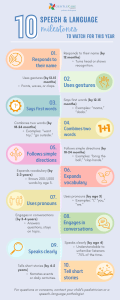
DOWNLOAD THIS HELPFUL INFOGRAPHIC!
Related reading: How to Track Speech Therapy Progress at Home: A Guide for Families and Setting Communication Goals for the New Year: Tips for Families and Providers
How GentleCare can help: Learn more about our Speech Therapy and Early Intervention (PA) services, or visit our Enrollment page to get started.
Quality ABA Therapy in New Jersey, Now servicing; Cherry Hill, Voorhees, Camden, Mount Laurel, Gloucester, Deptford, Burlington, Marlton and throughout Burlington, Camden and Gloucester Counties. We’re currently enrolling! Contact us to learn more and to get started.