

Key Takeaways
- Core vocabulary is the small set of words we use most often, like “go,” “want,” “help” and “more.”
- Repetitive, interactive books give many chances to model core words on an AAC device.
- Each of the 5 recommended books comes with a core vocabulary strategy and example.
Bonus: These books pair especially well with AAC devices!
October is AAC Awareness Month, making it the perfect time for educators and therapists to find books that support language development and AAC (Augmentative and Alternative Communication) use. Incorporating books that focus on core vocabulary can be a game-changer for effective communication. Core vocabulary consists of the 80% of words we use daily, including high-frequency words like “go,” “want,” “help,” and “more.” Teaching these words through engaging stories helps children express themselves more effectively across different contexts.
Here’s a list of books that our speech team recommends, each offering valuable opportunities to practice core vocabulary and empower communication through AAC devices.
1. Pete the Cat: I Love My White Shoes by James Dean
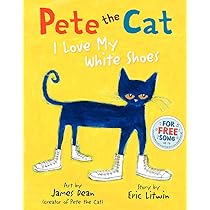
This book is perfect for teaching core vocabulary due to its repetitive text and interactive call-and-response format. While Pete encounters different situations in his colorful shoes, children can use their AAC devices to practice key core words.
- Core Vocabulary Strategy: Expressing Opinions and Reactions
- Example: Throughout the story, use the AAC device to model phrases like “I like,” “I don’t like,” “feel,” and “go.” For instance, when Pete steps in something, you can model saying, “Oh no!” or “It’s okay,” helping children learn to express their thoughts and feelings.
2. Chicka Chicka Boom Boom by Bill Martin Jr. and John Archambault
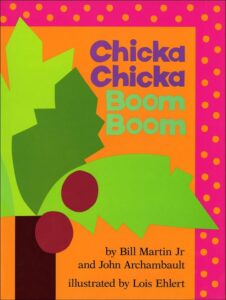
This lively alphabet story introduces letters climbing a tree in a fun, rhythmic way. The repetitive and rhythmic nature of the text offers an ideal opportunity to practice core words on an AAC device.
- Core Vocabulary Strategy: Using Action Words
- Example: Use the AAC device to model action words like “go,” “fall,” “up,” and “down.” For example, as the letters climb up the tree, press “go” or “up” on the device to describe their actions. This helps children understand and use versatile words that can be applied across different situations.
3. The Grouchy Ladybug by Eric Carle
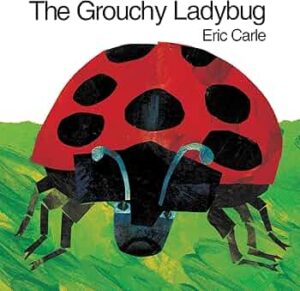
This story is useful for introducing core vocabulary words related to emotions, actions, and interactions. This book also can help with identifying animals! You can also target actions, verbs, and “WH” questions.
- “What sound does the elephant make?”
- “Where do whales live?”
- “What color are ladybugs?”
The story’s prompts and questions create an interactive reading experience, making it perfect for AAC practice.
- Core Vocabulary Strategy: Asking for Help or More Information
- Example: Use the AAC device to model “want,” “more,” “stop,” “go,” or “help” as you read. For instance, when the ladybug meets another animal, use phrases like “want more” to keep reading, or “stop” to indicate a pause. This repetition helps children become familiar with common words they will use in everyday conversations.
4. The Pout-Pout Fish by Deborah Diesen
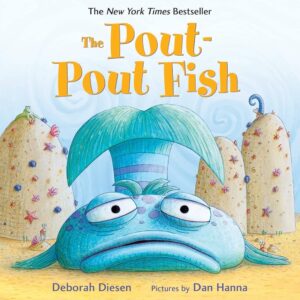
“The Pout-Pout Fish” provides opportunities to model core vocabulary such as “feel,” “want,” “like,” and “not.” The Pout-Pout Fish aso helps with articulation, with repetitive “P” sounds. This book is great for exploring social-emotional concepts, which aligns well with the use of core vocabulary.
- Core Vocabulary Strategy: Expressing Emotions and Desires
- Example: As you read, use the AAC device to express emotions using words like “feel,” “happy,” or “sad.” When the fish meets other sea creatures, model phrases like “want help” or “feel better.” This helps children learn to use core vocabulary to express their emotions and needs.
5. Jump! by Scott M. Fisher
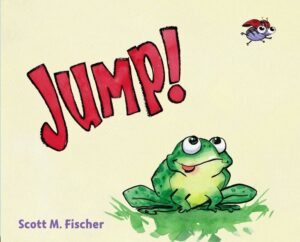
This action-packed book is excellent for teaching core vocabulary through its rhythmic text and repetition. It provides various scenarios where action words and core phrases can be modeled on an AAC device.
- Core Vocabulary Strategy: Describing Actions and Requests
- Example: Use the AAC device to model action words like “jump,” “stop,” “go,” and “look.” When an animal jumps in the story, say “jump” on the device, then ask “want more?” to encourage children to continue the interaction. This reinforces the use of core words related to movement and preferences.
“Jump!” by Scott M. Fisher is a fantastic resource for fostering literacy through its use of rhyming and repetition. The text enhances phonological awareness, a crucial aspect of reading development. Its repetitive structure helps children predict and engage with the content, reinforcing their grasp of language patterns.
Additionally, “Jump!” offers plenty of opportunities for movement breaks, making it especially appealing for sensory seekers and allowing readers to physically act out the different animals!
*Notable mention*
Brown Bear, Brown Bear, What Do You See?
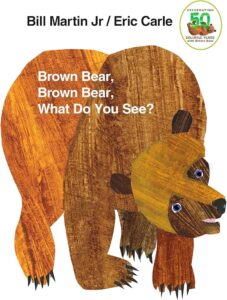
This classic book provides repetitive text that is perfect for modeling core vocabulary such as “see,” “look,” “what,” and “you.”
Use the AAC device to label actions and make simple requests, reinforcing the importance of core vocabulary in everyday communication.
By using these books to focus on core vocabulary, children can learn versatile and frequently used words that will enhance their ability to communicate in various settings. These stories provide engaging contexts for modeling and practicing essential vocabulary, helping children to express their needs, feelings, and ideas more effectively.
Related reading: Navigating AAC: Where Do We Start? and Using AAC During the Holidays
How GentleCare can help: Learn more about our Speech Therapy services, or visit our Enrollment page to get started.
Supporting families in Cherry Hill, Voorhees, Camden, Mount Laurel, Gloucester, Deptford, Burlington, Marlton and throughout Burlington, Camden and Gloucester Counties. We’re currently enrolling! Contact us to learn more and to get started.