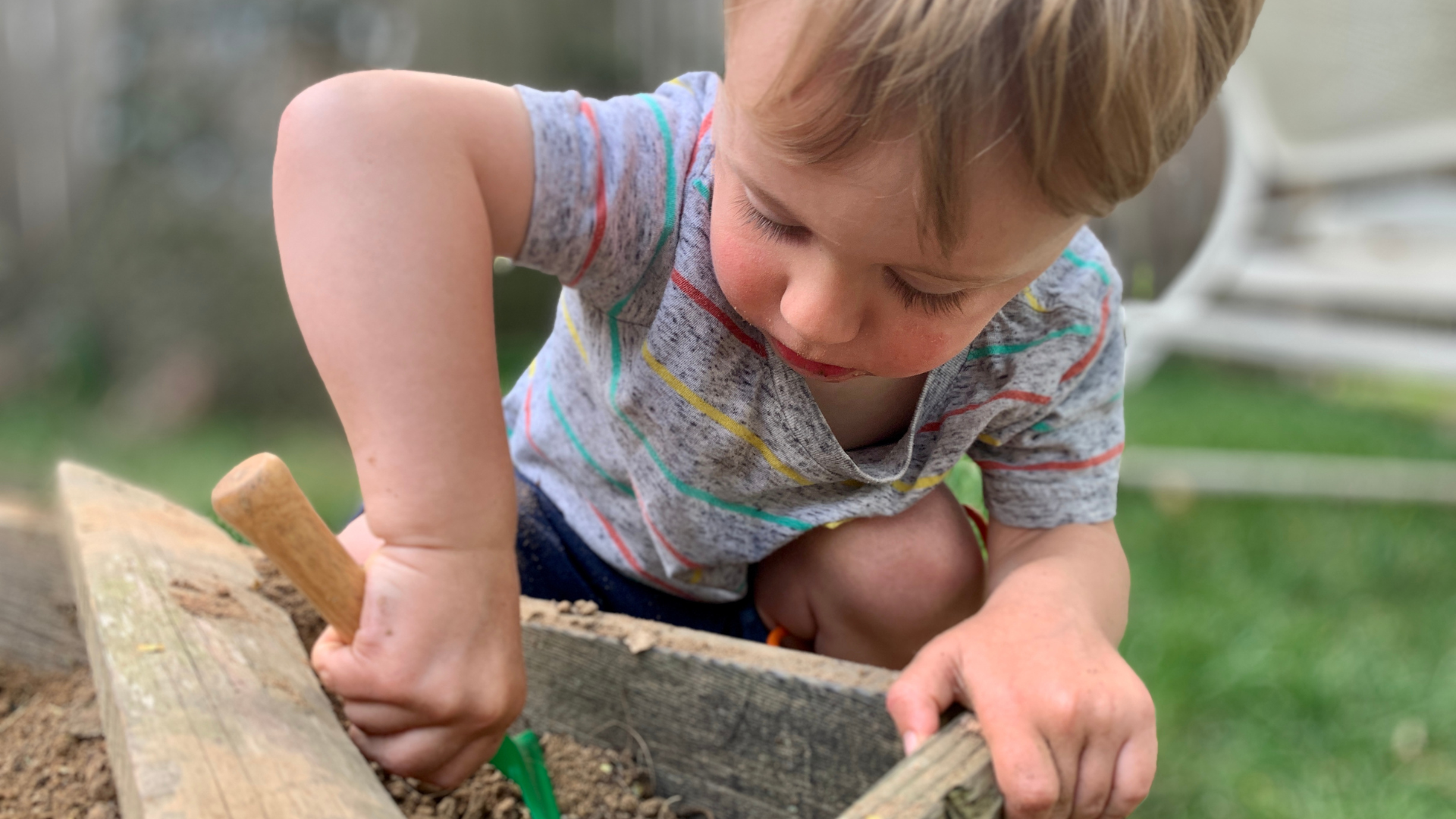
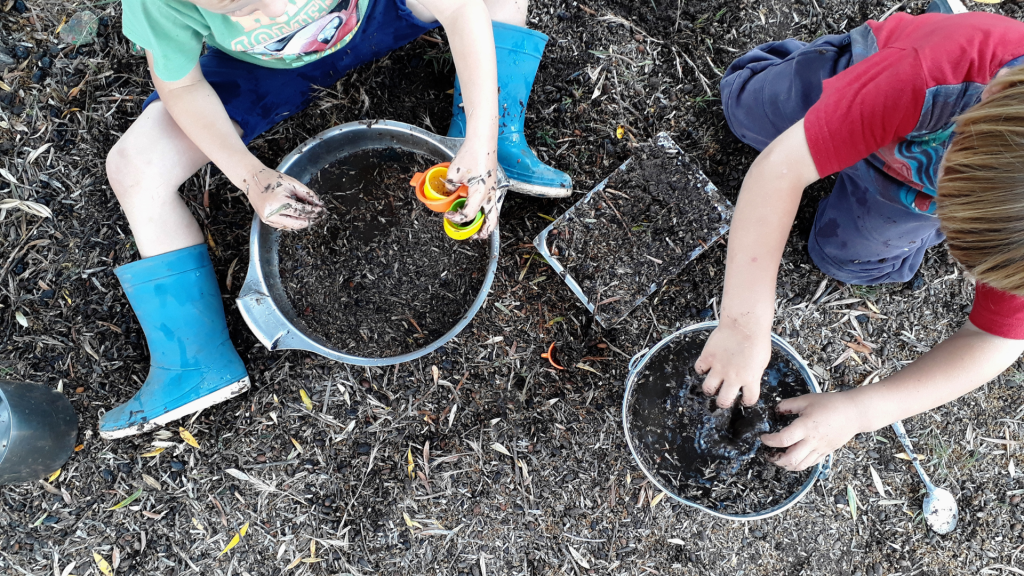
Outdoor play provides endless opportunities to build vocabulary. Whether exploring a park, backyard, or nature trail, here are some fun ways to introduce new words in a meaningful way!
1. Nature Collection for Categorization & Descriptive Words
Gather items like leaves, flowers, sticks, and rocks. Sort them by type, size, or color.
How to Incorporate Speech & Language:
- Describing: “This is a tiny leaf.” “This rock is smooth.”
- Comparing: “Which leaf is bigger?”
- Using AAC: Program descriptive words like “soft,” “rough,” “big,” and “small.”
2. Bug Hunt for Action Words & WH-Questions
Look for insects under rocks or in the grass.
How to Incorporate Speech & Language:
- Action Words: “The ant is crawling.” “The butterfly is flying.”
- WH-Questions: “Where do bugs live?” “What do bees make?”
- Turn-Taking: “I found a ladybug! Now you look!”

3. Cloud Watching for Imaginative Language
Lay on a blanket and describe what you see in the clouds.
How to Incorporate Speech & Language:
- Expanding Utterances: “I see a big, fluffy cloud!”
- Storytelling: “The cloud looks like a dragon flying in the sky!”
- AAC Use: Program phrases like “I see a…” and “That looks like a…”
📚 Recommended Resources:
- Rowe, M. L. (2019). The Role of Parent Input in Language Development and Implications for Intervention. Journal of Speech, Language, and Hearing Research.
- Kaderavek, J. N. (2021). Language Disorders in Children: Fundamental Concepts of Assessment and Intervention.Pearson.
- The American Speech-Language-Hearing Association (ASHA). asha.org
Quality ABA Therapy in New Jersey, Now servicing; Cherry Hill, Voorhees, Camden, Mount Laurel, Gloucester, Deptford, Burlington, Marlton and throughout Burlington, Hudson, Middlesex, Union, Camden and Gloucester Counties. We’re currently enrolling! Contact us to learn more and to get started.