
Key Takeaways
- Sensory sensitivities, interoception and communication can make traditional potty training harder.
- ABA breaks toilet training into small, manageable steps tailored to your child.
- Use a consistent schedule, visual supports, high-value reinforcement and gradual desensitization.
Toilet training is a major milestone for every child, but for parents of children on the autism spectrum, the process can feel overwhelming. Communication barriers, sensory sensitivities, and anxiety around schedule changes often make traditional potty training methods ineffective.
Using Applied Behavior Analysis (ABA) principles, toilet training is broken down into small, manageable steps tailored to your child.
Why Traditional Methods Don’t Always Work
Conventional potty training often relies on quick timelines or verbal cues alone. However, there are several unique factors that should be considered:
- Sensory Sensitivities: The sound of a flushing toilet, the temperature of the seat, or the sensation of sitting high above the floor can cause distress.
- Interoception Challenges: Interoception is the internal sense that tells us when our bladder is full. Children with autism may process these internal body cues differently.
- Communication Barriers: Expressing the physical need to go before an accident happens requires functional communication skills (verbal, sign language, or visual communication devices).
4 ABA Strategies for Successful Toilet Training
1. Establish a Consistent Schedule
Instead of waiting for your child to tell you they need to go, start with scheduled sit times (e.g., every 30 to 45 minutes for 2–3 minutes at a time). Consistency helps build routine and predictable habits.
2. Utilize Visual Supports
Visual schedules showing step-by-step illustrations (walk to bathroom → pants down → sit on potty → wipe → wash hands) reduce anxiety by clearly defining expectations.
3. Identify High-Value Reinforcement
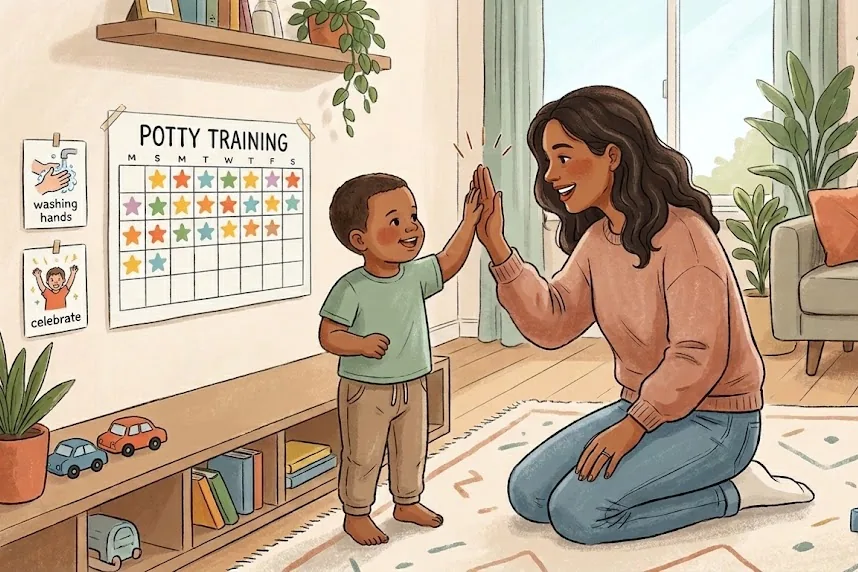
Immediate, highly motivating positive reinforcement is essential. Reserve a special reward—a favorite toy, sticker, or short video clip—specifically for successful potty trips so your child pairs toilet use with a positive experience.
4. Desensitize the Environment Gradually
If sensory triggers (like automatic flushes or loud fan noises) create fear, address them gradually. Let your child explore the bathroom while playing, sit on the toilet with clothes on first, or use a footstool for added stability and security.
How GentleCare Therapy Can Help
Potty training is one of many self-help and daily living skills supported through our comprehensive ABA treatment plans. Our BCBAs design individualized toilet training protocols and work directly with parents during caregiver coaching sessions to ensure strategies are seamlessly implemented at home.
Serving families across New Jersey and Greater Philadelphia, GentleCare Therapy is dedicated to helping your child build confidence and independence.
Interested in exploring ABA therapy for toilet training or daily living skills?
Reach out to our Care Coordination team at (856) 484-5535 or complete our online intake form today.
Related reading: Visual Schedules: Making Routines Predictable and What Is Parent/Caregiver Training?
How GentleCare can help: Learn more about our ABA Therapy services, or visit our Enrollment page to get started.