
Supporting safe and compassionate responses
Why De-Escalation Matters
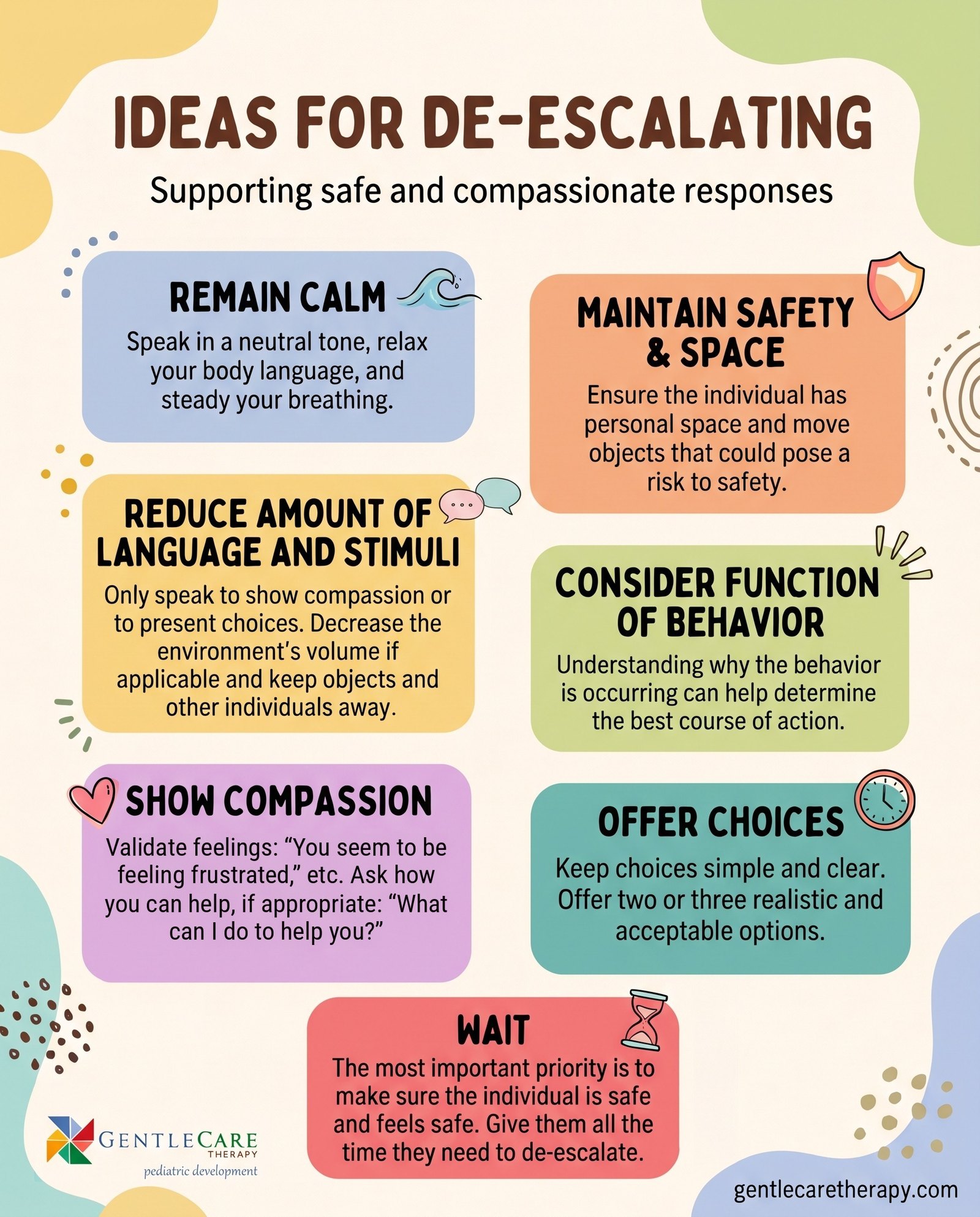
Remain Calm
Speak in a neutral tone, relax your body language, and steady your breathing.
Maintain Safety & Space
Ensure the individual has personal space and move objects that could pose a risk to safety.
Reduce Amount of Language and Stimuli
Only speak to show compassion or to present choices. Decrease the environment’s volume if applicable and keep objects and other individuals away.
Consider Function of Behavior
Understanding why the behavior is occurring can help determine the best course of action.
Show Compassion
Validate feelings: “You seem to be feeling frustrated,” etc. Ask how you can help, if appropriate: “What can I do to help you?”
Offer Choices
Keep choices simple and clear. Offer two or three realistic and acceptable options.
Wait
The most important priority is to make sure the individual is safe and feels safe. Give them all the time they need to de-escalate.
Helpful links:
- Our ABA therapy services
- What Is Parent/Caregiver Training?
- Handout: Functions of Behavior (Attention and Tangible)
If big emotions are making daily life hard, you don’t have to figure it out alone. GentleCare Therapy supports families in Gibbsboro, Camden County, and South Jersey. Contact us today.